
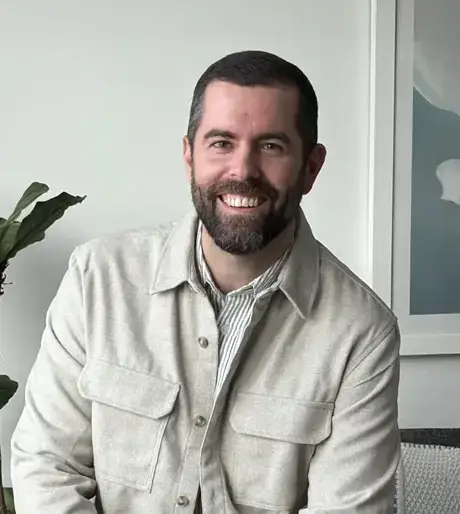
Our therapists offer free 15 minute consultations by video. Phone calls are available by request only.
Our therapists offer free 15 minute consultations by video. Phone calls are available by request only.
Some of the people I see are living with something that will not wait for a better time. A diagnosis. A parent or a partner they are caring for and losing at the same time. Someone they love who is still here, but who dementia has changed enough that the grieving has already started. Others come after a death, when the months since have been harder than anyone warned them they would be. Others are somewhere quieter: a marriage, a friendship, or a family that has gone silent, where neither person wants the distance and neither knows how to close it. And some arrive because something has moved in how they understand their life, their faith, or themselves, and they want to explore it with someone who will neither dismiss it nor oversell it.
Most people arrive more tense than they realize. Sped up, braced, and so used to it that it feels normal. Some of that starts to ease as we work, and it is usually one of the first signs that something is shifting.
I also do not believe therapy gives you something you are missing. Most of what matters, you already have. My job is to help you find it.
Before training as a psychotherapist, I spent eight years on the staff of a church, and the heart of that job was being with people at the hardest moments of their lives. Much of it did not happen in an office. It happened in living rooms and hospital rooms, and sometimes over lunch, because that was where the person wanted to talk. Some people wanted to pray. Some wanted to sit in silence. Some wanted to say things out loud they had never said to anyone. I accompanied people through long illnesses, was present when someone died, and kept meeting with families in the months afterward, once everyone else had gone back to their own lives.
That work shaped how I sit with people now as a psychotherapist. It is where I learned that very little needs to be solved in the moment, that people can carry far more than we assume when someone stays with them, and that the conversation someone most needs to have is often the one everyone around them is avoiding.
Alongside it, I hosted a meditation circle that began weekly and became twice weekly, and ran several years of public conversation between different faith traditions. As part of my degrees, I completed my supervised practicum training in psychotherapy at the University of Toronto, meeting one to one with students and staff who were my clients, and designing and running overnight retreats.
I hold a Master of Divinity and a Master of Psychospiritual Studies from the University of Toronto, a degree that pairs psychotherapy training with the study of meaning, spirituality, and how people make sense of their lives. I grew up in a faith context, my father a minister and my mother a counsellor, though I have always had a skeptical streak and plenty of doubt of my own. I learned first about faith within Christianity, and I have spent years reading and practising within Buddhism, Hinduism, Kabbalah, and Sufism as well. I am now a Registered Psychotherapist (Qualifying) with the CRPO.
I ask a lot of questions, and I pay close attention to the details. When something seems important, I will say so and ask you to stay with it a little longer rather than move on. I will tell you what I am noticing rather than keep it to myself.
You are unlikely to find me cool or clinical. I respond like a person, within the clear boundaries the work needs, and I think those two things belong together. Being met warmly is what makes it possible to say hard things, and the boundaries are what make it safe. In my experience the relationship between us is not an extra alongside the real work. A great deal of the work happens there.
I am also not inclined to hide from the uncomfortable parts, the things we are taught to tuck away or call ugly. I would rather bring some light to them. I have watched enough of those parts turn into something valuable that I trust the process.
Where it fits, and only if you are open to it, we might use some quiet breathing or meditation together. It is remarkable what can open up in that space.
If any of this sounds frightening or foreign, that is alright. We go gently and find your pace.
I did much of my growing up in transit. My family lived in Scotland and in Australia when I was a child, though we were mostly based in Canada, and I have been travelling ever since. In my early twenties I spent a year backpacking around Australia and New Zealand. Then came the two years that changed the most. I cycled about seven thousand five hundred kilometres across Western Europe, then traded the bicycle for a guitar and spent the better part of a year hitchhiking and busking my way through Eastern Europe, with a short spell in Morocco and a final month in Turkey. Later I lived in Ecuador for a year and travelled widely through South America, and spent several months in India and Nepal.
I set out on most of those trips without much of a plan and kept finding things in myself I had not expected. That willingness to head somewhere without knowing where it ends is the same one I bring into a room with a client.
Music came before meditation for me. In my twenties, songwriting was the closest thing I had to a spiritual practice, the way I worked things out before I had any other language for it. I still play most mornings. My son and I sing together and laugh a good deal, which has become one of the better parts of my day.
For eight months I was also the first person living in a house that a group was turning into an intentional community, a household of people choosing to live together with a shared purpose. I was there alone to begin with. I built up the gardens, organized the community meals, meditated, and welcomed the people who eventually moved in. I loved all of it, the solitude as much as the company. I wrote a book there too, one that began as a novel and became a memoir of those travelling years. It still needs a great deal of editing.
I keep a long meditation practice that includes many Vipassana retreats I have sat and helped run. For years I also carried a phone with no apps on it, until work made that impractical. Balance is probably the strongest current in my life: a genuinely skeptical, scientific mind alongside a real appetite for faith, mystery, and the unknown. I lean into both, and I think of myself less as an expert than as a fellow traveller.