
Play Therapy for Grown-Ups
By Rhonda Breitbach, Registered Psychotherapist (Qualifying)

Many of the women I meet are carrying so much: responsibilities, expectations, the quiet pressure to hold it all together and somehow enjoy it too. Over time, that kind of living can flatten something essential. Before we can move toward something new, we first have to imagine that something different is possible. Play offers a way back into that imaginative space—not play with a goal or outcome, but purposeless play that invites curiosity, creativity, and a gentle loosening of control. Moments of beauty, creativity, and wonder—like those that arise in art-making and imaginative exploration—can shift our nervous system toward openness, creating the conditions for new possibilities to emerge.
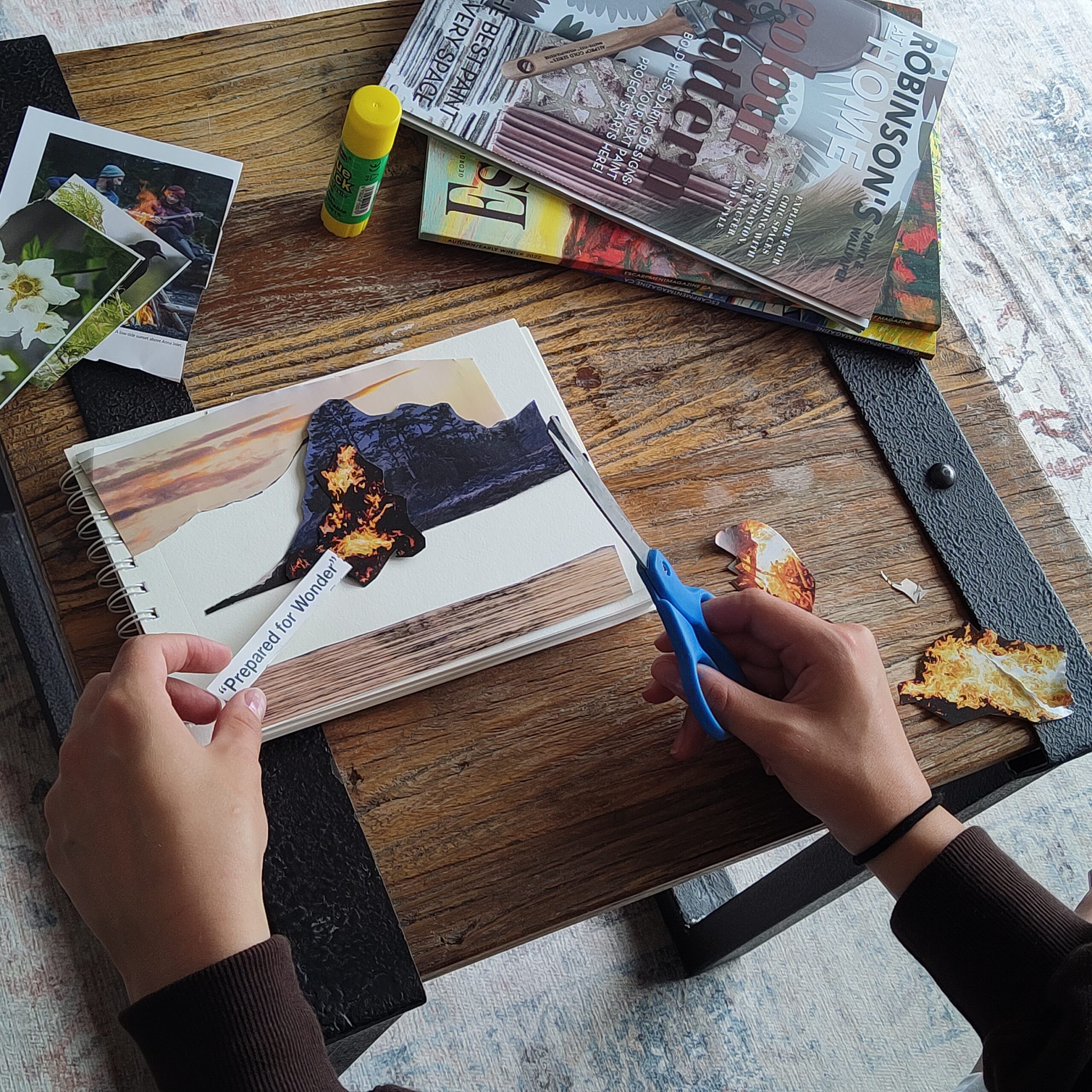
I found my way to this work at a time when I felt overwhelmed and burnt out, facing what felt like tidal waves of expectations. The studio became a reprieve—a space to pause, turn inward, and engage with what felt too much to hold. Through simple, playful invitations, I could reshape problems in clay, spread emotion across large sheets of paper, and let quiet inner experiences take form. There was laughter, silliness, even a sense of magic—like adding a bit of glitter back into life. If you were to create a magic potion for yourself right now, what would you include? In making without a plan, I began to trust my capacity to create something new, unexpected, and even meaningful from what once felt overwhelming.
In a world where technology increasingly outpaces human effort, it’s worth asking what remains distinctly ours. Creativity. Imagination. Playfulness. The freedom to experiment, to make mistakes, to begin again. Many adults are quietly yearning for what these capacities restore: pleasure, self-expression, intuitive guidance, and a renewed ability to look inward rather than constantly outward for answers. Yet somewhere along the way, we learned that being capable meant being composed, efficient, and certain. In the expressive arts therapy space, that pressure softens. Clients often find themselves surprised—“I haven’t thought about that in years”—as moments of memory, delight, and curiosity re-emerge, bringing with them a renewed sense of aliveness.

Healing can be serious and, at times, painful work. But playfulness and levity offer an essential counterbalance. They soften the edges of difficult experiences and support movement through them. Purposeless play becomes more than a pause; it becomes a resource—a way to reconnect with vitality, courage, and possibility. In this way, expressive arts therapy is more than art-making. It is a practice of returning to yourself, and to the quiet, steady knowing that new pathways in your life can still be created. Maybe even with glitter.