
The Quiet Work of Winter
By Rhonda Breitbach, Registered Psychotherapist (Qualifying)

Winter invites us to move differently. The light shortens, the air cools, and the natural world pulls inward. Leaves fall. Sap slows. Fields lie fallow. Nothing about this season is rushed—and nothing about it is wasted.
In her book Wintering, Katherine May reflects on winter not only as a season, but as a lived experience shaped by her own periods of difficulty and emotional strain. She writes, “Wintering is a time of withdrawal, of retreat, of rest.” Rather than something to resist or push through, winter becomes a necessary phase—one where change and restoration begin quietly.
May reminds us that “plants and animals don’t fight the winter; they don’t pretend it’s not happening.” Instead, they adapt by “withdrawing from the world, maximising scant resources.” Winter, she suggests, “is not the death of the life cycle, but its crucible.” It is where transformation takes form, unseen.
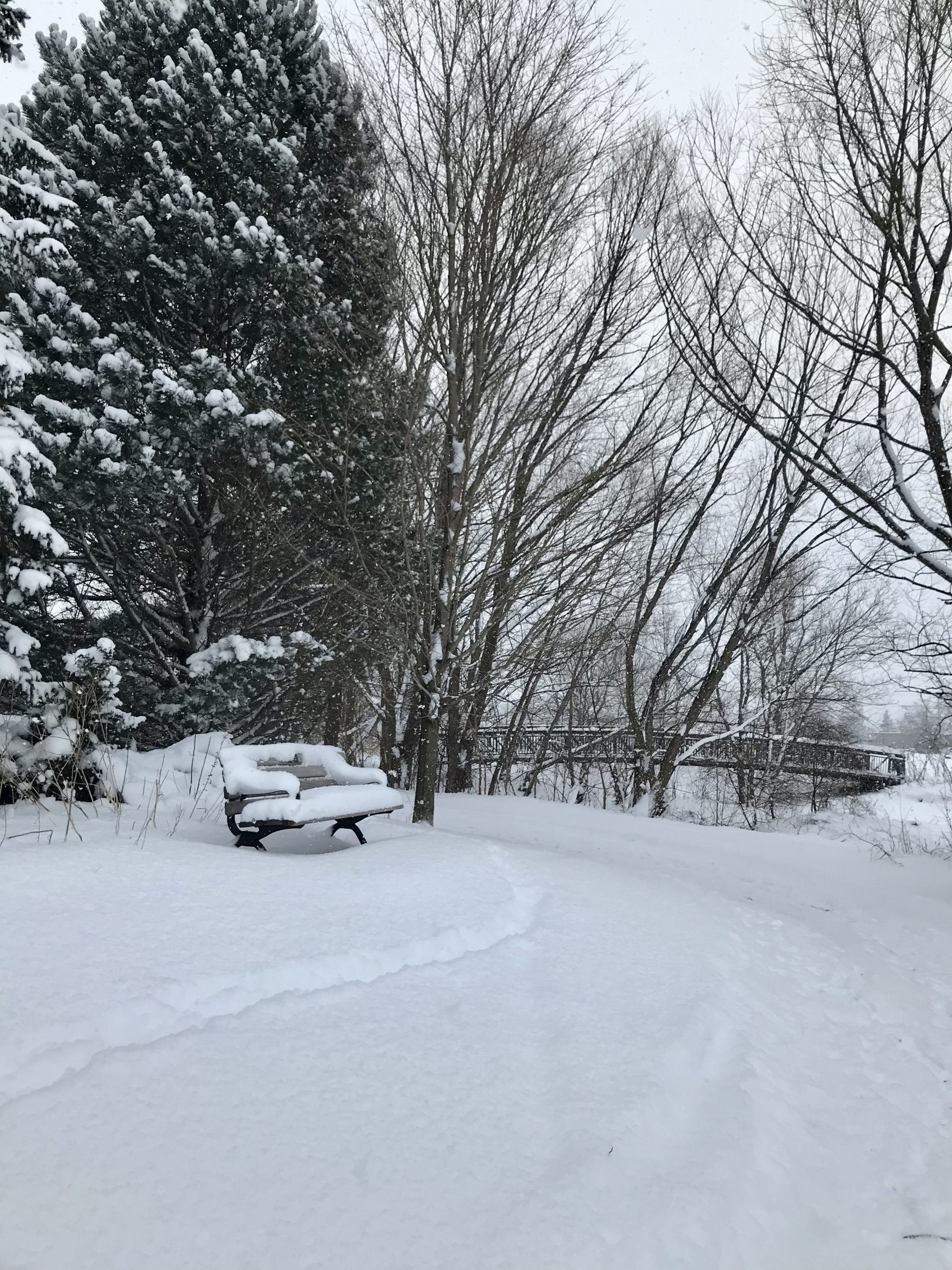
I feel this most clearly when walking our local forest trails at this time of year. The trees stand bare, their familiar outlines changed, revealing the intricate structure beneath. They bend with the wind, draw on what they have stored, and remain rooted through the cold. There is a quiet honesty in this season of the trees—nothing hidden, nothing forced. I find myself returning to this image as a reminder that even when outer layers fall away, strength remains. What sustains us is often invisible, quietly carrying us through.
From a mindfulness and therapeutic perspective, wintering mirrors the practice of staying with what is difficult rather than rushing past it. When we meet hard emotions—grief, fatigue, uncertainty—with compassion and care, we often discover that they are not fixed. They shift, soften, and change in their own time. Emotions move. Seasons turn.
Winter does not ask us to hurry. It asks us to listen, to rest, and to tend gently to what is present, quietly preparing the ground for what will grow next.
